
Area and Oriental rug care: the owner's manual
Last updated: July 2026
A wool rug that gets vacuumed weekly and rotated twice a year can serve a family for decades. There's a reason rug cleaning starts at $1 per square foot: wool repays the extra care. Here's how to give it that care.
We clean wool, Oriental, and synthetic rugs across Huntsville, and most of the damage we see didn't come from spills. It came from years of well-meaning habits: too little vacuuming, the wrong vacuuming, no pad underneath, no rotation. Consider this the owner's manual your rug never shipped with.
- Vacuum weekly — slow passes, suction only, and never a spinning brush on the fringe.
- Rotate the rug 180 degrees twice a year so sun and foot traffic wear it evenly.
- Put a pad under it — the cheapest life extension a rug can get.
- Spills: blot, never rub, and plain cool water only on wool.
- A grey Persian is usually ground-in grit, not fading — a deep clean brings the color back.
Is your rug wool or synthetic?
Check the label first. A corner tag that reads "100% wool" settles it, while polypropylene, olefin, polyester, or nylon means synthetic. If the tag is missing, your hands and eyes can get you most of the way there.
Wool feels warm, slightly dry, and springy — press the pile and it stands back up. Synthetics feel slicker and often carry a faint sheen under lamplight. Now flip a corner over. A pattern you can see clearly on the back in rows of tight knots usually means a hand-made wool rug, while a stiff latex or mesh backing usually means machine-made synthetic.
The distinction matters because the two fibers call for different chemistry and different amounts of water, and they don't dry the same way. It's also the logic behind the prices above: wool takes more skill and more time per square foot. Delicate dry-clean-only materials like velvet or linen are priced case by case.
Why is your Persian rug going grey?
Grey, dull color on a Persian or Oriental rug is usually not dirt you can see. It's dry soil: fine grit that sifts down to the base of the pile, where every footstep grinds it against the wool. The grit scratches the fibers the way sand scratches eyeglasses, and scratched fibers scatter light instead of reflecting it. The color is still in the rug. The surface has just been sanded matte.
The fix runs against instinct: vacuum more, not less. Owners tend to baby their good rugs, and the babying is exactly what wears them out, because the grit stays in and keeps grinding. Weekly gentle vacuuming pulls it out before feet drive it deeper. Once the dullness has set in, a deep clean lifts out the packed soil and the color returns with it. That's the heart of our rug cleaning service.
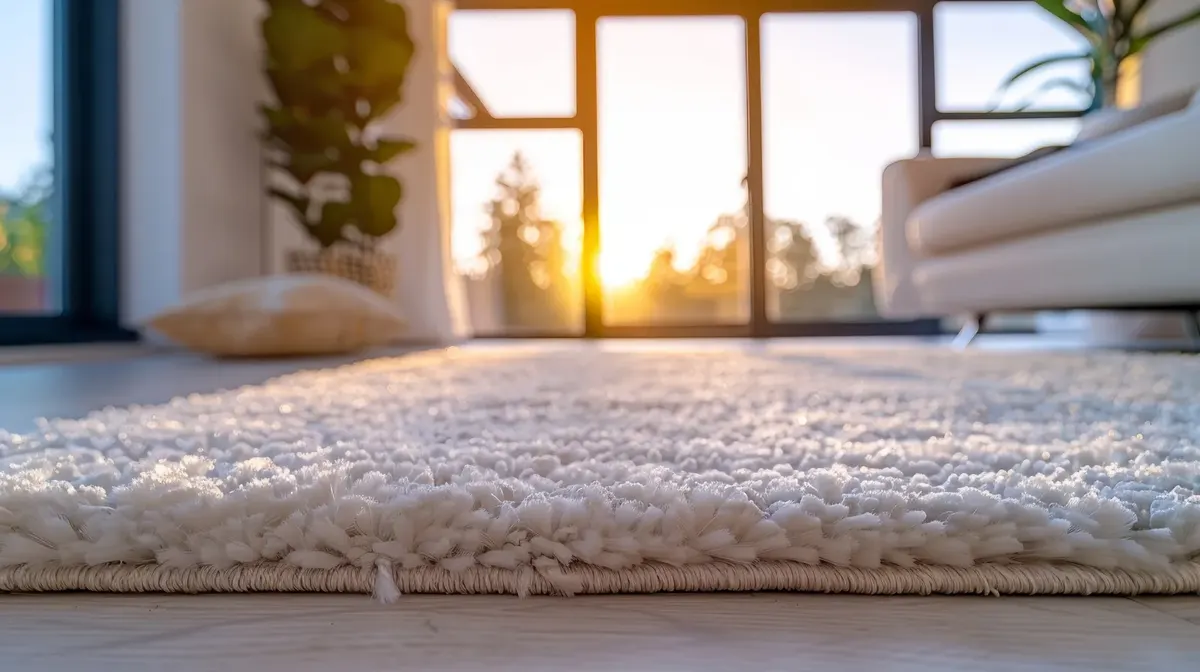
Is all that shedding normal?
If the rug is new wool, yes. Wool yarn is spun from short fibers, and the loose ends work their way out over the first several months of the rug's life. Fluff in the vacuum canister doesn't mean the rug is dying. It's just settling in, and the shedding tapers off as the loose fibers run out.
Two rules while it does. Vacuum gently with suction rather than an aggressive brush, because a beater bar rips out fibers that were still attached and drags the process out. And when a single tuft "sprouts" above the pile, snip it level with scissors. Never pull it; one pulled loop can run like a snagged sweater.
What's the right way to vacuum an area rug?
Use suction only, or raise the beater bar to its highest setting so it barely touches the pile. Go slow, because a slow pass pulls up grit that a fast one skates over. Alternate your direction each session so the pile doesn't get trained to lean one way.
The fringe is the one place a vacuum does real damage. A spinning brush grabs the strands, wraps them around the roller, and tears them off at the base, and fringe repair costs more than years of careful vacuuming would. Skip the fringe entirely or use a bare suction hose on it.
A few times a year, flip the rug face-down and run the vacuum across the back. That loosens the deep grit that surface passes never touch, and you'll be surprised what one more pass on the front side picks up afterward.
Does rotating the rug actually matter?
Twice a year, spin the rug 180 degrees. Two slow forces are working on it: sunlight through the windows fading whichever side faces the glass, and foot traffic wearing lanes between the sofa and the kitchen. Rotation doesn't stop either force. It spreads the wear evenly, so the rug ages instead of looking damaged.
Sun fade deserves extra respect in Alabama, because it's one of the few problems no cleaning can reverse. If the rug sits in a wall of afternoon sun, sheer curtains or a partly closed blind during the worst hours will buy it years. As for remembering the rotation, tie it to something you already do twice a year, like the time change, and it actually happens.
Is a rug pad worth the money?
Yes, and not mainly for comfort. A pad keeps the rug from creeping and rippling, and a rippled rug wears fast along every ridge while it trips everyone in the house. It also cushions the pile so grit grinds less with each step — the same abrasion that greys a rug, slowed down.
A pad protects the floor underneath too, and it lets air move under the rug instead of trapping moisture against the floor. If your rug lies directly on the floor right now, a decent pad is the cheapest life extension you can buy it.
What should you do when something spills?
On synthetic, relax — polypropylene and nylon forgive nearly everything if you get there the same day. On wool, the rules tighten, because wool fiber is at its weakest when wet. Either way, the sequence is the same.
Blot, never rub
Press a dry towel into the spill and blot. Rubbing grinds the spill deeper and roughs up wet wool.
Add a little cool water
Plain cool water, used sparingly, then blot again — repeat until the towel comes up clean. Keep supermarket spot sprays away from wool; many are too harsh and can brown the fiber or bleed the dye.
Press it dry, then dry it flat
Press the spot as dry as you can with weighted towels, then let it finish drying flat.
Know when to stop
If it's red wine, pet urine, or anything on a rug you'd hate to lose, stop at blotting and call us. A spot that's merely damp is far easier to save than one that's been experimented on for a week.
When is it time to call a professional?
Call when the rug reads grey despite regular vacuuming, when a spill won't blot out, when a pet has an accident on wool, or when you honestly can't remember the last cleaning. Any of those means the problem has moved past what a vacuum and a towel can fix.
One thing that surprises people: we clean rugs in your home. We bring the equipment to the rug, work right where it lies, and it stays on your floor the whole time. It's the same low-moisture process we use on wall-to-wall carpet, so the rug is dry in about an hour, and you get an exact written price before we start. And if the rug shares a room with carpet, we can do both in one visit, and the whole floor is done after a single drying hour.
What else do rug owners ask?
How can I tell whether my rug is wool or synthetic?
Read the corner tag first: it will say 100% wool or list a synthetic like polypropylene, olefin, polyester, or nylon. No tag? Use touch and the back of the rug. Wool feels warm and springy and shows the pattern in tight knots on the back; synthetics feel slick, often carry a faint sheen, and usually have a stiff latex or mesh backing. Still unsure? Text a photo to 256-203-1984 and we'll tell you.
Why is my Persian rug looking grey?
Almost always dry soil, not fading. Fine grit works down to the base of the pile and gets ground against the wool with every footstep. The scratches make the fibers scatter light instead of reflecting color, so the rug reads grey and flat. The dye is still there underneath. Vacuum weekly with gentle suction to slow it down, and have the rug deep cleaned to pull out the packed grit. The color usually comes back with it.
How do I stop a rug from shedding?
Mostly, you wait it out. New wool rugs shed loose spinning fibers for their first several months. That's normal, not a defect. Help it along by vacuuming gently with suction only, since a spinning beater bar tears out fibers that were still attached. When a tuft sprouts above the pile, snip it level with scissors — pulling it can unravel a whole row. Heavy shedding that continues for years is worth a professional look.
How should I vacuum an area rug?
Slow passes with suction only, or with the beater bar raised to its highest setting. Alternate your direction each session so the pile wears evenly, and never run a spinning brush over the fringe — it wraps the strands and tears them off. A few times a year, turn the rug face-down and run the vacuum across the backing to shake out the deep grit. Weekly is the right rhythm for a rug that gets walked on daily.
Carpet you can walk on in about an hour.
3 rooms for $109 · Love the clean or it's free.